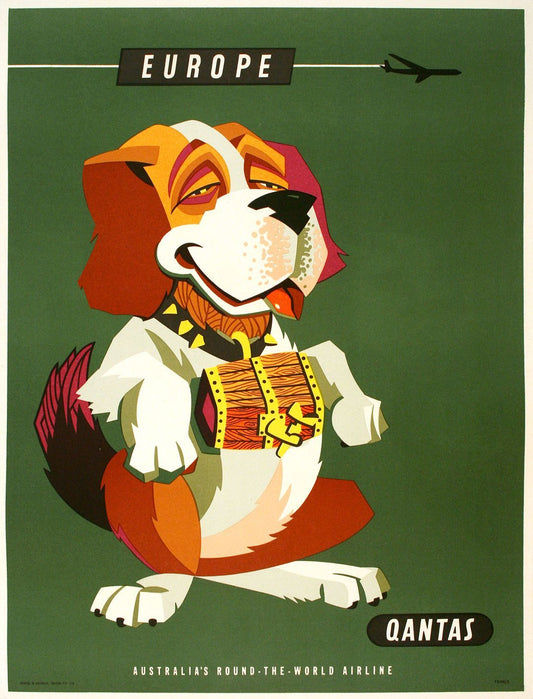
Vintage Travel Posters: A Journey Through Time and Design

The paper smells faintly of age. Ink once bold now softens into muted reds, greens, ochres. Edges fray where thousands of fingertips have lingered. These are not just prints pinned to a wall. They’re fragments of travel history, messengers of wanderlust vintage travel posters still carrying the power to pull a viewer across oceans without moving an inch.
Why do these artifacts feel alive? Because they weren’t built for nostalgia. They were meant as urgent invitations: see the Alps, sail to Marseille, cross the Atlantic in luxury liners. Over the decades, they have become icons of style, craft, and cultural aspiration.
Origins: Posters Before Tourism Was a Brand
Commercial lithography in the late 19th century made images more affordable and bold. Cities, railways, and shipping lines started commissioning artists to paint dreams mountains rising like temples, steamships like floating hotels. In France, especially, the poster became an art form rather than a mere advertisement.
A young artist named Leonetto Cappiello emerged during this time. His striking color blocks and playful exaggerations set a new tone. Although not all his work was travel-related, his visual language influenced art deco travel posters across Europe. Vivid silhouettes, audacious typography, and theatrical composition: suddenly, a piece of paper could be a stage.
Design Elements that Shaped an Era
Look closely at vintage poster art from the 1920s and '30s. Lines are bold, not timid. Color fields seem poured rather than brushed. You’ll see perspectives that stretch rail tracks into infinity, skies painted in gradients no camera of the period could capture. These were the first “hero shots” of travel marketing.
Art Deco was the movement that wrapped glamour around steel, glass, and speed. So it’s no surprise that art deco travel posters advertised ocean liners, express trains, and new resorts with geometric confidence. Fonts slanted forward, implying motion. Figures wore angular coats a hint of vintage fashion posters and design cross-pollination between travel, cinema, and couture.
Cultural Windows: Reading Between the Images
Each vintage travel poster reveals more than a destination. They’re mirrors of national pride, advertising budgets, and social aspirations. A 1930s ski poster from Switzerland doesn’t only say “Come ski.” It tells you who the imagined visitor was affluent, cosmopolitan, healthy. A vintage French poster for the Riviera frames the coastline as a modern playground yet rooted in Mediterranean tradition.
Collectability and Value
Not all posters survive. Paper decays, light bleaches, and basements flood. So when a collector finds a well-preserved original, the stakes rise. Authenticity matters and this is where many novices stumble. A true collector examines paper quality, printer’s marks, and condition reports.
Comparing Styles Across Regions
|
Region / Era |
Common Themes |
Color Palette |
Signature Artists |
|
France (1890–1935) |
Coastal resorts, railways |
Deep blues, creams, and golds |
Jean-Gabriel Domergue, A.M. Cassandre, Roger Broders |
|
Switzerland 1920–1940 |
Ski resorts, alpine tourism |
White, scarlet, forest green |
Martin Peikert, Emil Cardinaux |
|
Italy 1920–1950 |
Ocean liners, aperitifs, cities |
Orange, teal, and black accents |
Marcello Dudovich, Mario Borgoni |
|
USA 1930–1960 |
National Parks, airlines |
Earth tones, bright yellows |
WPA artists, David Klein (TWA) |
This table shows how location shaped aesthetics. French posters leaned elegantly and theatrically. Swiss posters became iconic for minimal ski silhouettes. American posters emphasized grand landscapes.
Modern Relevance: More Than Decoration
Why are vintage travel posters still so magnetic in digital times? Because they are the opposite of stock images. They’re hand-drawn, tactile, imperfect. Designers today study their color harmonies and lettering to rediscover human-scale aesthetics. Even brands borrow from this nostalgia including craft breweries, boutique hotels, and tourism boards.
Display one in an office or living room, and the effect differs from generic art prints. It signals connoisseurship, but also curiosity. It turns a wall into a story.
Quick Guide: Spotting Authentic Vintage Travel Posters
-
Paper Feel: Originals are often printed on thicker stock or display lithographic dots under magnification.
-
Printer Marks: Look for lithographer names at the edge or in small fonts.
-
Condition: Minor folds or patina can be normal; suspiciously “perfect” condition may be a modern reprint.
-
Linen Backing: Common with valuable pieces. Check the method and the restorer's reputation.
-
Provenance: Reputable dealers provide clear history and authenticity guarantees.
Your Trusted Source for Original Vintage Posters
That question leads naturally to sources that specialize in originals. Many online shops sell reproductions; fewer offer genuine works with provenance. One trusted example The Ross Art Group curates over 2,500 original posters, including rare vintage travel posters. Since 1991, they’ve developed a reputation for authenticity and conservation-level framing. Collectors worldwide use their searchable online gallery to find travel, food, and even vintage French posters by major artists such as Cappiello. For interior designers or private buyers, they ship globally and offer multilingual support. This makes browsing less like shopping and more like entering a carefully edited museum.
Find Your Perfect Piece of Travel History Shop Authentic Originals