


1
/
of
1
Booby Trap - Syphilis and Gonorrhea Poster
Booby Trap - Syphilis and Gonorrhea Poster
Authenticated Original
Over 30 Years in Business
A. Paris
C1940
15"x20.5"
(38x52cm)
(38x52cm)
14449
Regular price
€4.345,95 EUR
Regular price
Sale price
€4.345,95 EUR
Unit price
/
per
Shipping calculated at checkout.
Couldn't load pickup availability
Shipping Info
Shipping Info
- All posters ship within 1–2 business days
- Each poster includes an individually signed Certificate of Authenticity. More Info
Buy with Confidence
Buy with Confidence
Returns accepted within 7 days of receipt. See our full return policy.
FAQs
FAQs
See answers to our most common questions, here
Looking to Sell?
Looking to Sell?
We are always interested in acquiring special pieces. Let's get in touch!
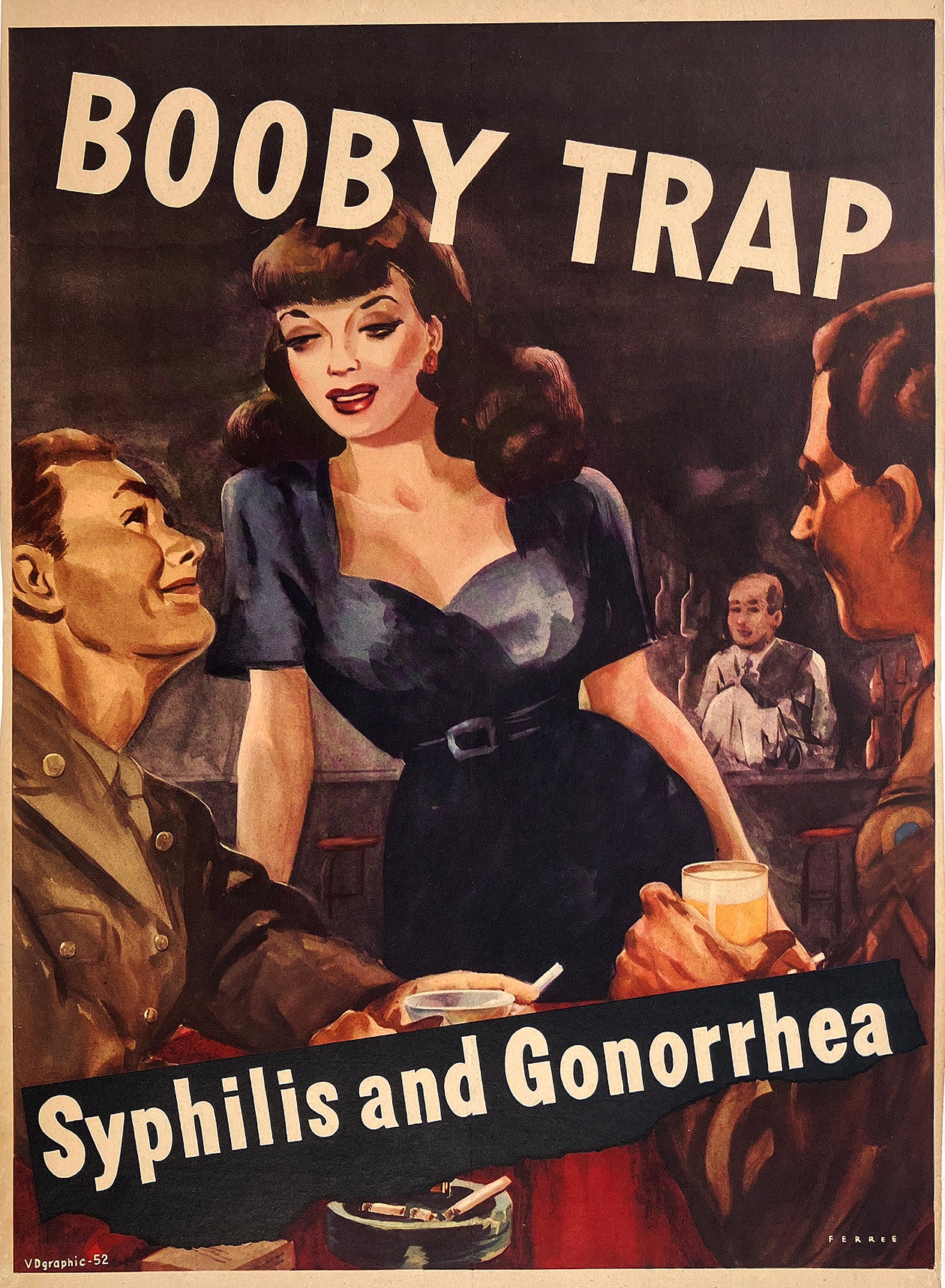
This original government-issued poster warns American servicemen of the dangers of contracting venereal diseases while on leave. The image shows an attractive woman engaging with two uniformed soldiers in a bar setting, while the bold headline “Booby Trap” underscores the metaphor of sexual temptation as a hidden threat. With painterly mid-century illustration and dramatic lighting, the poster uses suggestive visual cues typical of military health propaganda—aimed not at moral judgment, but at preventing soldiers from engaging in risky encounters that could compromise operational readiness.During World War II and the early postwar period, venereal disease presented a significant medical concern among troops returning from overseas. In the absence of widespread penicillin use early in the war, infections such as syphilis and gonorrhea caused long periods of lost duty time, medical expense, and potential long-term disability. The U.S. government launched an aggressive public-health campaign targeting servicemen through posters, pamphlets, films, and base-level medical briefings. Messaging often linked sexual encounters with anonymous or casual partners to enemy threats, implying that disease could weaken the fighting force just as effectively as battlefield injuries. Even after the war, the campaign continued as troops returned home, where authorities feared that untreated infections could spread into the civilian population.The artist, signed here as E. Paris, contributed to a number of mid-century health-education and government-issued posters. Though biographical documentation is limited, artists working in this genre commonly produced illustrations for public service campaigns, military publications, and commercial print ateliers, developing a pragmatic style designed to communicate quickly and convincingly to enlisted audiences.This is an Original Vintage Poster, it is not a reproduction. This poster is conservation mounted, linen backed and in excellent condition. There is slight unevenness in the side margins We guarantee the authenticity of all our posters. This poster is exceptionally rare.
View full details
What Does 'Original' Mean?
We only deal in original vintage posters, never reproductions. This means that every poster is from the original print run, in the year listed in the description. Everything we sell comes with an individually signed certificate of authenticity, which we fully guarantee.